

7 Best Movie Prop Stores for Collectors to Browse
Last Updated: November 19, 2026
Quick Summary
The best movie prop stores for collectors are defined by verifiable licensing and provenance, not price. A store that documents its official partnerships and ships certified collectibles with matching authentication beats a marketplace listing with no paperwork. Judge the paperwork, not the price tag.
- Scaled prop replicas cost under $100 and suit first-time buyers and desktop displays.
- Memorabilia kits run $25-$100 and deliver more pieces per dollar than a single showpiece.
- Autographed premium pieces start at $1,000+ and require serial-numbered, tamper-evident holograms.
- Verify licensing, the certificate of authenticity and the provenance chain before paying.
- Screen-used originals usually surface through specialist auction houses, not retail stores.
Table of Contents
- What Separates the Best Movie Prop Stores for Collectors
- Quick Comparison: Replica Categories and Price Bands
- Entry-Level Scaled Replicas: Lyon Estates, Plutonium Case and Time Circuits
- Mid-Range Prop Replicas and Memorabilia Kits
- Autographed and Premium Pieces for Serious Collectors
- How to Verify Movie Prop Authenticity Before You Pay
- Screen-Used vs Prop Replicas: What You Are Actually Buying
- Choosing Your First Piece from the Store
- Frequently Asked Questions
What Separates the Best Movie Prop Stores for Collectors
The best movie prop stores for collectors are defined by one thing above all else: verifiable licensing and provenance. A store that can document its official partnerships, ship certified collectibles with matching authentication, and explain exactly what a buyer is getting will always beat a marketplace listing that offers no paperwork.
That distinction matters more than most buyers realize. Back to the Future™ operates with the full support and cooperation of the filmmakers since 1995, and the replica market splits into two camps: licensed, documented pieces and unlicensed lookalikes with no chain of custody. The gap between them is not cosmetic. It is the difference between a collectible with resale value and a paperweight.
Below, we break down movie prop replicas by budget tier, explain how to verify authenticity before you pay, and show you where to start. The categories run from entry-level scaled replicas to fully autographed premium pieces.
Quick Comparison: Replica Categories and Price Bands
Prop replicas in this range span from entry-level scaled pieces to premium autographed items, and each suits a different collector. Entry-level scaled replicas suit desktop display, while premium autographed and cast-signed pieces climb into four figures.
| Category | Typical Price Band | What You Get | Best For |
|---|---|---|---|
| Scaled prop replicas | Under $100 | Metal or resin miniatures, collector packaging | First-time buyers, desktop display |
| Memorabilia kits | $25-$100 | Multi-piece paper and prop sets | Fans who want variety |
| Full-size replicas | $100-$500 | Large display pieces, molded construction | Dedicated collectors |
| Autographed premium | $1,000+ | Cast signatures, hologram certification | Serious investors and collectors |
A common mistake is assuming price equals authenticity. It does not. Judge the paperwork, not the price tag.
Entry-Level Scaled Replicas: Lyon Estates, Plutonium Case and Time Circuits
Factory Entertainment's Scaled Prop Replica line offers entry-level pieces at an affordable price while keeping the fine details collectors expect.
Three stand out from our own range. The Lyon Estates Gate scaled prop replica measures 4 inches wide and features double-sided artwork, so you can display the pristine 1955 version or the 1985 graffiti timeline. The Plutonium Case replica is cast from solid metal and can be displayed open or closed. The Time Circuits replica is also solid metal at 4 inches wide, with collector packaging included.
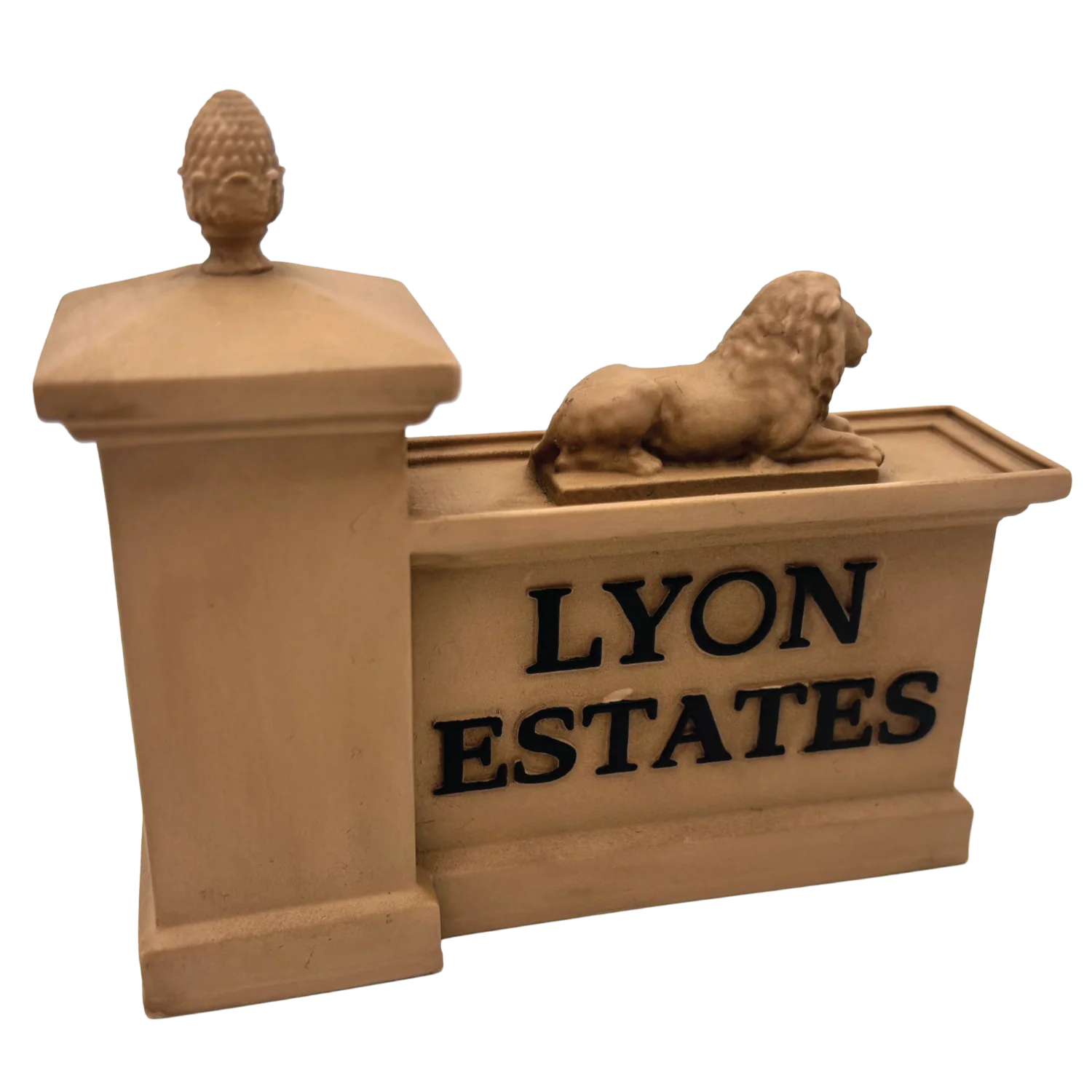
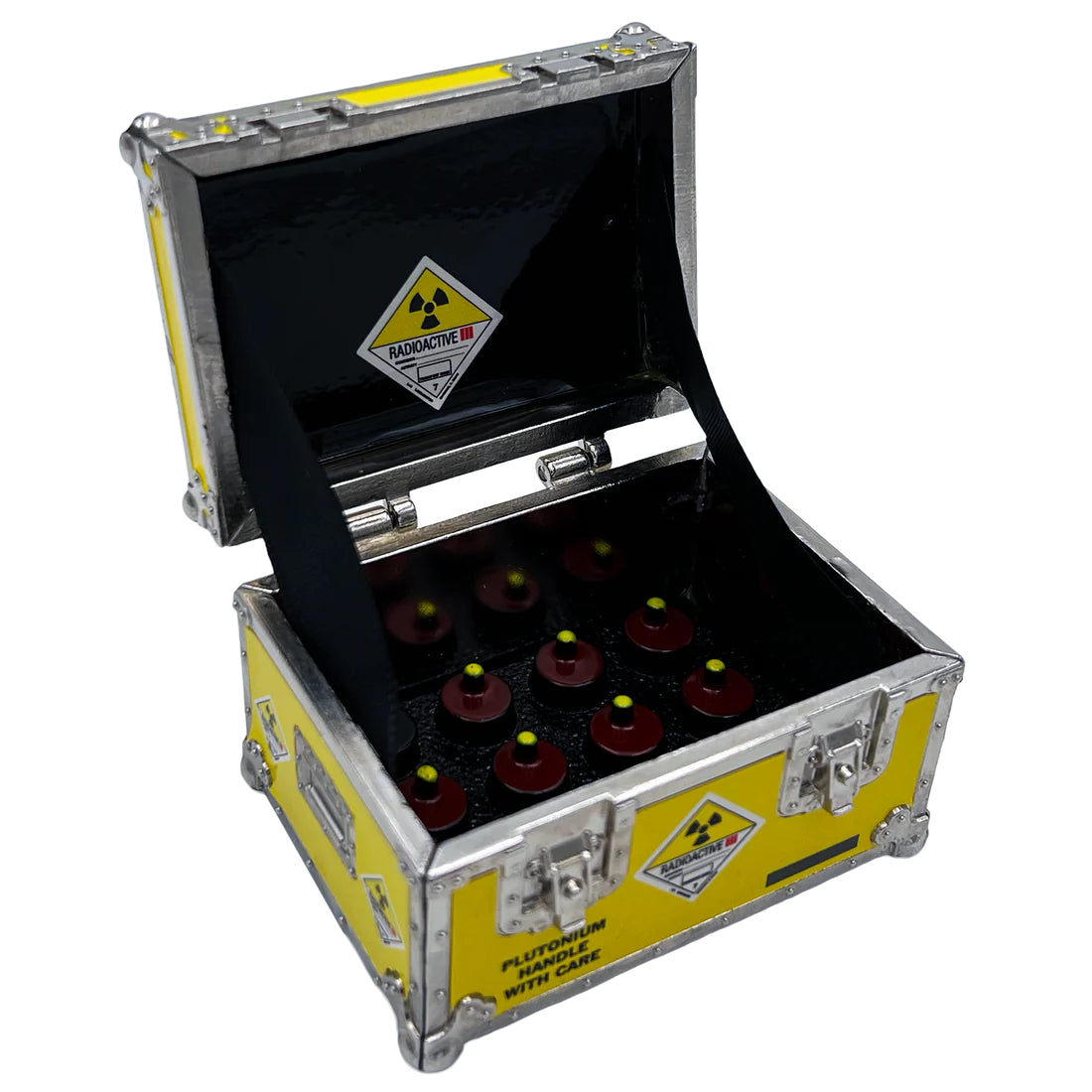
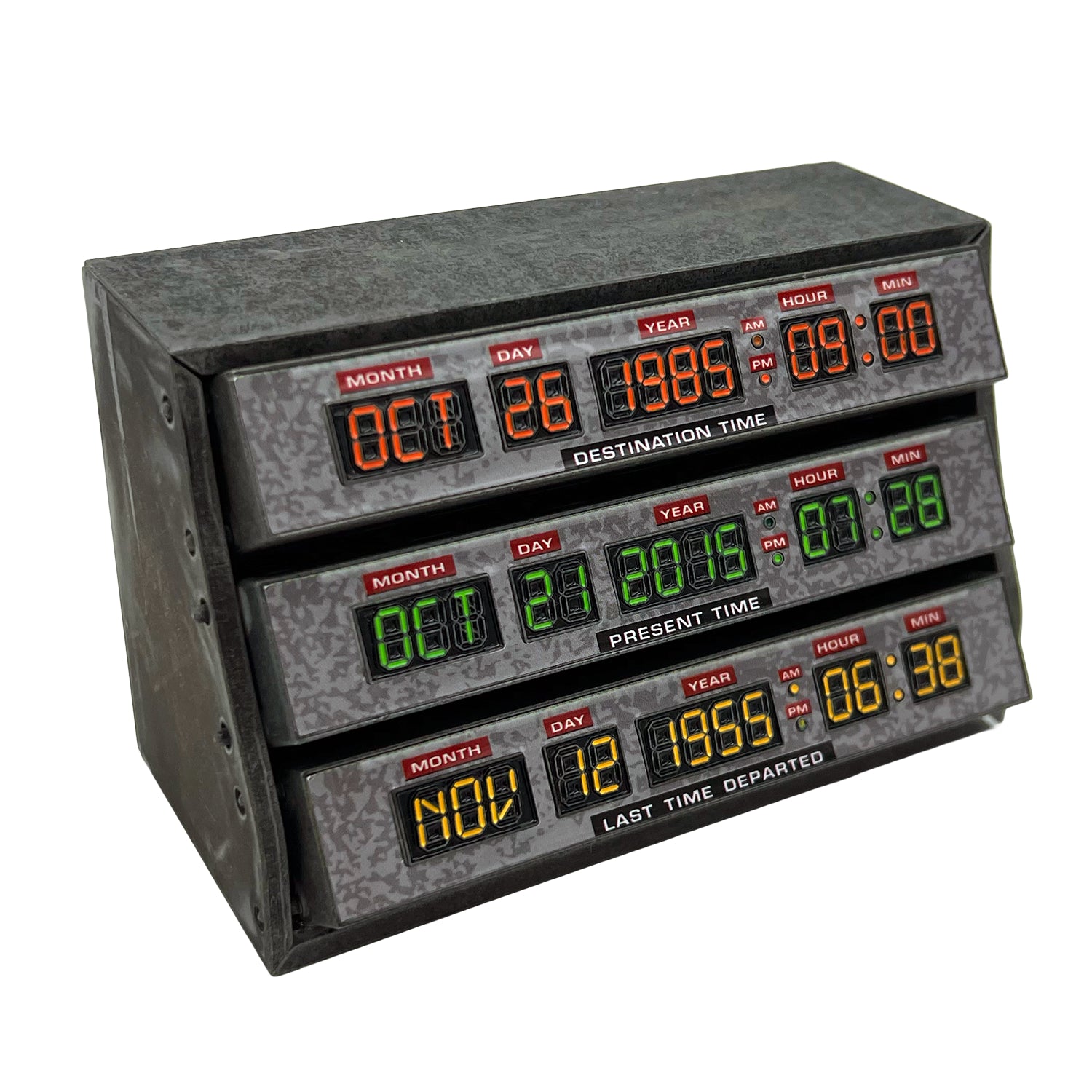
Several pieces in this line were previously SDCC exclusives. The Plutonium Case cylinders are not removable, and the hoverboards do not actually fly.
Best for: first-time buyers and desktop displays. Skip if: you want a centerpiece piece.
Mid-Range Prop Replicas and Memorabilia Kits
Memorabilia kits suit fans who want breadth over a single showpiece. Instead of one large replica, you get a curated set of production-inspired paper props and small items that recreate the film's world.
The Time Travel Memories Kit is the clearest example. It bundles items from Marty's journeys across 1955, 2015, 1885 and an alternate 1985, including the OUTATIME license plate, the Flux Capacitor schematic, the McFly family photo with its lenticular disappearing effect, and Hill Valley maps for each era. The Grays Sports Almanac replica is a natural companion piece, published with real content for the first time and measuring 13 by 7.5 inches across 151 pages. For collectors who want to extend an existing kit, the "1.21 Gigawatts" expansion adds blueprints and newspaper clippings.
Kits deliver variety rather than a single large piece.
Best for: fans building a themed display. Skip if: you only want large-format pieces.
Autographed and Premium Pieces for Serious Collectors
Autographed pieces are where provenance stops being a nice-to-have and becomes the entire purchase. A signature without a verifiable authentication chain is worth very little, no matter how convincing it looks in a photo.
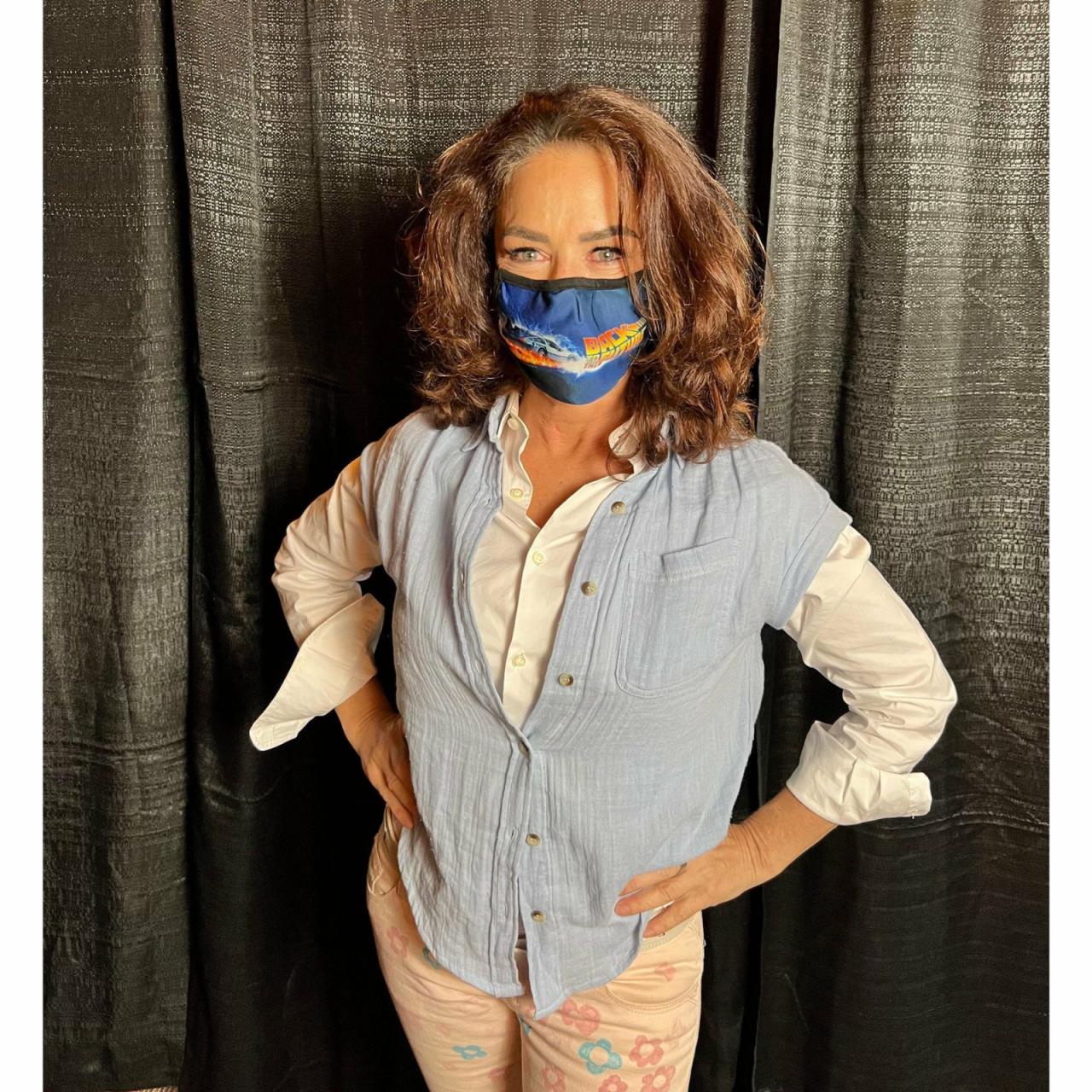
This is the tier where documentation separates real stores from risky ones. The Michael J. Fox autographed Part II hoverboard ships with a Celebrity Authentics serial-numbered, tamper-evident authentication hologram and a certificate of authenticity featuring a picture of Michael signing the hoverboard. The cast-signed version carries signatures from Michael J. Fox, Christopher Lloyd, Tom Wilson, Lea Thompson, James Tolkan, Donald Fullilove and Harry Waters Jr., with matching certificates.
This tier is aimed at collectors who want the documentation that accompanies a signed piece.
Best for: serious collectors and investors. Skip if: you want something to handle regularly.
How to Verify Movie Prop Authenticity Before You Pay
Verifying movie prop authenticity means checking three things before money changes hands: the licensing claim, the certificate of authenticity, and the provenance chain. A legitimate seller will answer all three without hesitation, and the answers should be specific enough that you could repeat them to another collector.
Start with licensing. Officially licensed replicas name the studio or rights holder, and reputable stores state their partnerships openly. Ask which entity granted the license and for what product category, because a license to sell apparel is not a license to sell prop replicas. A store that cannot name the rights holder in writing is asking you to take its word.
Next, examine the certificate of authenticity. A useful COA includes a serial number, a tamper-evident hologram, and ideally a photograph of the signing or production process. The serial should match the item, and the hologram should be physically attached rather than printed as an image.
Finally, ask about provenance: where did the piece come from, and can the seller document each step? For replicas, provenance is the license plus the manufacturer's records. For screen-used items, provenance is the chain from set to seller, and it should include auction records, studio paperwork, or a documented private sale.
A certificate printed on plain paper with no serial number and no matching hologram offers little verification. The hologram and the serial are what make it traceable, and a seller who resists questions about either is telling you something.
For a deeper walkthrough, our guide on how to spot fake movie merchandise covers the red flags in detail. The U.S. Federal Trade Commission guidance on endorsements and testimonials is also worth reading, because it explains what sellers may and may not claim about authenticity and endorsements.
Screen-Used vs Prop Replicas: What You Are Actually Buying
Screen-used props and prop replicas are fundamentally different products, and confusing them is the most expensive mistake in this hobby. A screen-used prop is an original object handled by actors on set. A prop replica is a licensed reproduction made to look like it. Production-used items sit in between, offering genuine set use without the lead-actor premium.
The practical difference shows up in four places: provenance, price, where you buy, and what protects you after the sale. Screen-used originals carry the strongest provenance and the highest prices, and they usually surface through specialist auction houses rather than retail stores. Replicas are manufactured, repeatable and affordable, which makes them far easier to authenticate: the licensing and the certificate do the work for you. Production-used items require the same provenance checks as screen-used pieces but often cost less because the association is smaller.
A decision framework helps more than a definition. Ask three questions: what is your budget, what is the display goal, and do you care about resale? If the budget is under a few hundred dollars and the goal is a shelf display, a licensed replica is the sensible choice, and the certificate is your protection. If the budget is four figures and the goal is an asset, screen-used or autographed pieces make sense, but only from sellers or auction houses with published provenance.
Costs can differ by channel, so compare the total price including shipping and any applicable taxes or fees before you buy.
Buyer protections also differ. Before you buy, confirm the return policy, any authenticity guarantee, and who pays for return shipping if an item is not as described.
Buy replicas from licensed stores, and treat any "screen-used" claim as unverified until the seller produces documentation.
Choosing Your First Piece from the Store
Choosing a first piece comes down to three questions: what you want to display, how much space you have, and whether you care about resale. Answer those honestly and the category picks itself.
- Casual fan, small space: start with a scaled replica under $100.
- Themed display in progress: a memorabilia kit gives you more pieces per dollar.
- Long-term collector: save for an autographed piece with full certification.
- Cosplay or convention use: prioritize full-size replicas over scaled miniatures.
One insider observation: collectors who start small tend to stay in the hobby longer. A first purchase that fits your shelf and your budget beats an aspirational piece that sits in its box.
The hardest part of collecting is not finding props. It is trusting that what you buy is real, licensed and documented. Back to the Future™ has operated with the full support and cooperation of the filmmakers since 1995 and served as an official partner for Universal Studios and Amblin Entertainment's 30th Anniversary marketing campaign. Browse the scaled replica line for an affordable start, explore the memorabilia kits for breadth, or step up to a certified autographed hoverboard when you are ready. Get started with Back to the Future™ and build a collection you can document, display and pass on.
Frequently Asked Questions
How can I verify the authenticity of a movie prop?
Check the paperwork first. A legitimate piece ships with a certificate of authenticity that names the signing or licensing partner, plus a serial-numbered, tamper-evident hologram you can match to that certificate. Look for the official licensor's branding on the packaging and confirm the seller states the item is officially licensed. Photographs of the actual signing, like the ones supplied with autographed hoverboard replicas, add another layer of proof. If a listing shows no certificate, no hologram and no licensing statement, treat the item as unverified.
What is the difference between a screen-used prop and a prop replica?
A screen-used prop appeared on camera during production and is a one-off piece, so it usually surfaces at auction with provenance documents. A prop replica is a licensed reproduction made for collectors, produced in larger numbers and priced far lower. Replicas can still carry real value: an autographed hoverboard signed by Michael J. Fox and authenticated by Celebrity Authentics is a replica with verified provenance, while a scaled metal time circuits piece at 59.88 dollars is an entry-level collectible. Decide which category you want before you compare prices.
Where can I buy authentic movie props and replicas?
Buy from a store that states its licensing relationship openly. The Back to the Future store operates with the support and cooperation of the filmmakers and has been an official partner on Universal Studios and Amblin Entertainment campaigns, which is the kind of claim you can check. Its range runs from a 18.88 dollar DeLorean key set replica up to a 3499.88 dollar cast-autographed hoverboard. Ask any seller who licenses the product and who authenticates the signature before you add to cart.
Are expensive autographed replicas worth it compared to cheaper collectibles?
It depends on what you want from the piece. A 49.88 dollar scaled Lyon Estates gate gives you a display-ready collectible with double-sided artwork. A 1499.88 dollar hoverboard hand-signed by Michael J. Fox adds a verified signature and a numbered authentication hologram, which adds a verified signature and authentication. Start with an affordable piece if you are new to collecting, then move up once you know which films and formats you want to focus on.
How do I store and display prop replicas safely?
Keep replicas out of direct sunlight, which fades printed artwork and packaging over time. Display autographed pieces behind glass or in a case, and keep the certificate of authenticity stored separately from the item in a folder so it does not crease. For metal scaled replicas, wipe with a dry cloth rather than polish, since abrasive cleaners can dull the finish. Keep original collector packaging intact: for pieces previously sold as convention exclusives, the box is part of the value.
